
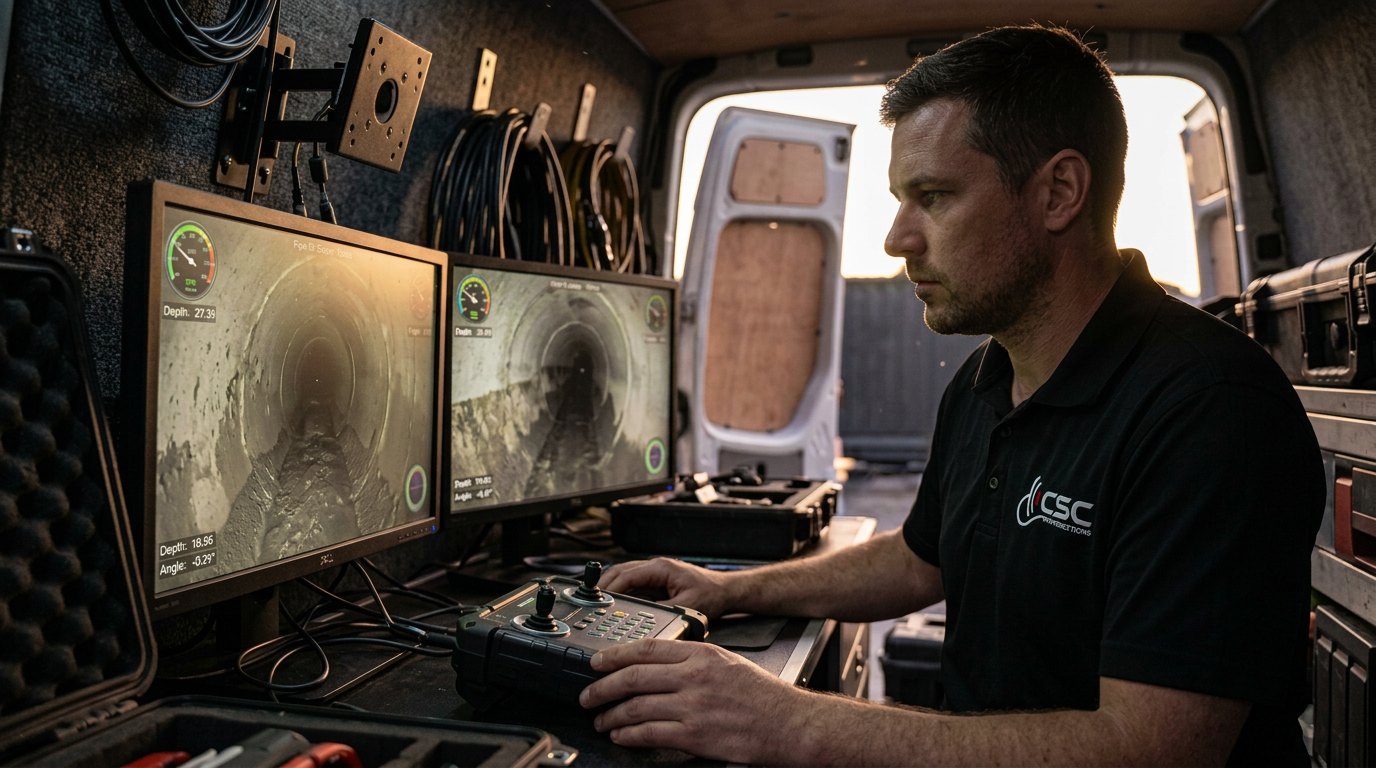
A commercial sewer camera inspection should produce more than a video file. The useful product is a clear record of what was inspected, where each condition was found, how serious it is and what the project team should do next. That distinction matters on Austin construction closeouts, facility investigations and municipal work because a camera run without reliable locations or documentation rarely answers the question that sent the crew underground.
Start with a defined inspection scope
Before mobilization, identify each line by building, cleanout or manhole, note the expected pipe size and material, and provide available plans. The scope should state whether the goal is new-construction acceptance, a recurring blockage investigation, a pre-rehabilitation baseline or a general condition assessment. A defined purpose determines the camera equipment, cleaning needs and reporting detail.
What the recorded video should show
- A clear starting view that identifies the access point and direction of travel
- Continuous footage with an on-screen distance counter tied to the point of entry
- Adequate lighting and a clean lens so the full pipe wall can be evaluated
- Slow, centered travel through each defect instead of a fast pass that hides detail
- A complete run to the agreed termination point, or a documented reason the camera could not continue
- A closing view or narration that confirms the inspected line and total footage
What belongs in the written report
The report should match the video and identify the site, inspection date, line segment, access points, pipe size, material, inspected length and direction. Each observed condition needs a footage location, plain-language description and still image. For specification-driven work, NASSCO PACP coding gives engineers and public-works reviewers a consistent vocabulary for structural and operational conditions.
Defect locations must be usable in the field
A note such as 'crack at 62 feet' is useful only when the footage starts from a named cleanout or manhole and the direction is clear. Surface locating can add a paint mark or coordinates when excavation, lining or a point repair may follow. The report should distinguish camera footage from a surface-located position because they answer different questions.
When the line needs cleaning first
Standing water, grease, roots, scale and construction debris can hide the pipe wall. The operator should document the obstruction and explain whether cleaning is needed before a complete condition assessment. On commercial kitchen, multifamily common-line and construction turnover work, pairing jetting with a post-cleaning camera pass often prevents an inconclusive report and a second mobilization.
Deliverables to request before authorizing the work
- The original video in a common file format
- A written PDF report with line identification, footage and still images
- PACP-coded observations when required by the owner, engineer or municipality
- A list of inaccessible or incomplete segments and the reason each was not completed
- Surface locations for repair targets when included in the scope
- A clear turnaround date and delivery contact for the project team
Austin sewer camera report questions
- Is video alone enough for a commercial sewer inspection?
- Usually not. Commercial buyers, engineers and municipalities need the inspected segment, footage locations, observed conditions and an understandable written record in addition to video.
- When is PACP coding needed?
- Use PACP coding when the specification, engineer, municipality or asset-management program requires standardized condition classification. Confirm the required format before mobilization.
- Can CSC locate a defect at the surface?
- Yes, when surface locating is included and site conditions permit it. The report should identify whether a location is based on camera footage, surface locating or both.
- How should an Austin contractor prepare the line?
- Provide plans, identify access points, confirm site access and traffic restrictions, and disclose known backups or recent cleaning. CSC can advise whether pre-cleaning should be included.