
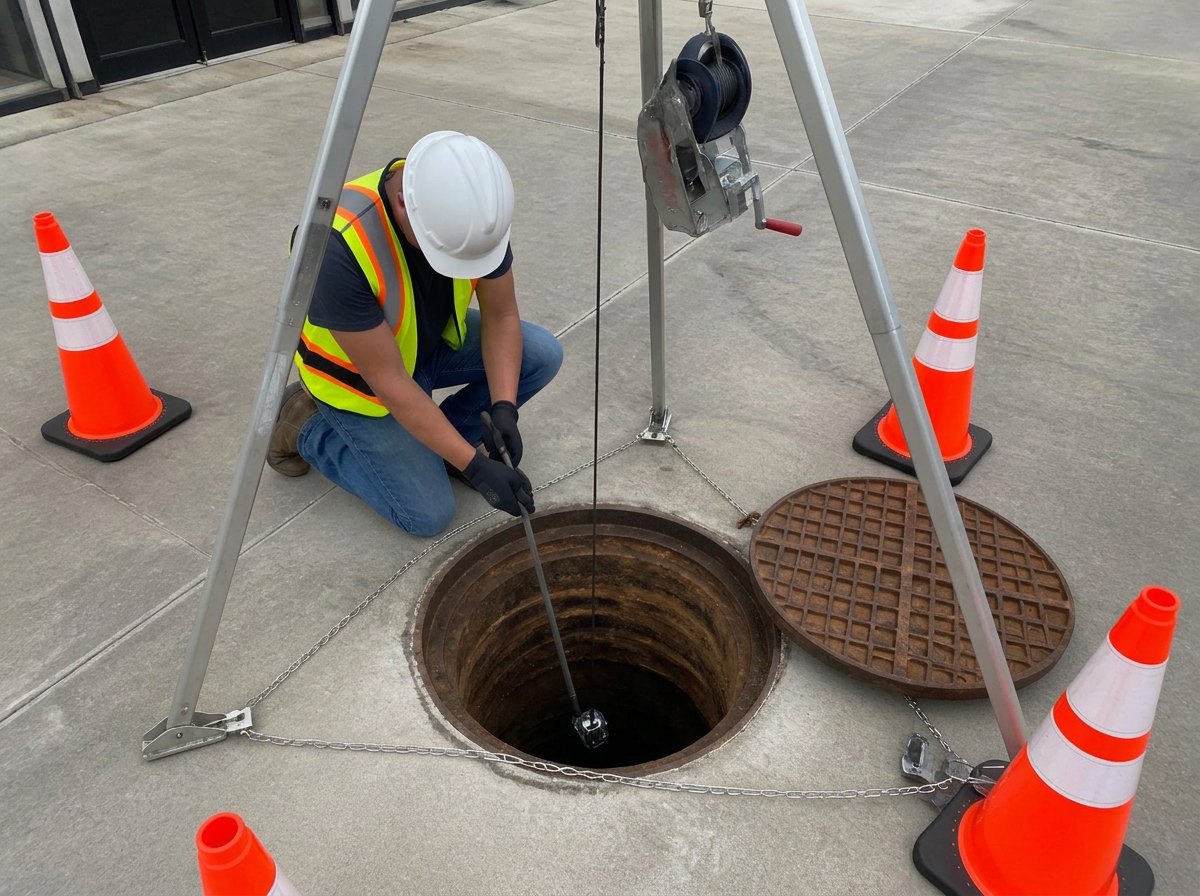
Austin commercial and municipal sewer lines fail in patterns. Clay and cast iron laid decades ago sits under expansive soil, heavy traffic loading and a tree canopy that keeps looking for water. Add commercial kitchen grease, construction debris and long dry spells followed by heavy rain, and most of the calls a Central Texas crew runs fall into a short list of repeat conditions.
Root intrusion through joints and cracks
Live oak and pecan roots follow moisture into any joint that has shifted. Cable clearing restores flow, but the roots return on a predictable cycle unless the defect is documented and the segment is scheduled for cleaning or rehabilitation. A camera run after clearing shows whether the joint is separated, the pipe is cracked or the tap is simply open.
Grease and solids in restaurant and food-service lines
Kitchen lines in downtown Austin, mixed-use retail and campus food service build grease faster than most maintenance schedules assume. Cable work punches a hole through the blockage and leaves the wall coated. Wall-to-wall jetting followed by a camera pass is what actually restores the full diameter and gives the facility team a baseline to plan the next cleaning interval.
Bellies and sags from soil movement
Central Texas clay swells and shrinks with the weather. Lines settle, standing water collects in the low point, solids drop out and the segment blocks repeatedly no matter how often it is cleared. A camera with an accurate footage counter identifies where the sag starts, how long it runs and whether the fix is maintenance cleaning or a point repair.
Offsets, cracks and failed taps
Offset joints, fractures and protruding taps show up on older commercial services and on new construction where a line was damaged during backfill. These are the findings that decide whether a segment can be rehabilitated in place or has to be excavated, so they need footage locations and still images, not a verbal summary.
Construction debris on new commercial work
Grout, rock, mud and stray material left in a line during construction cause acceptance failures at turnover. Inspecting before closeout is far cheaper than a callback after the building is occupied and the slab is poured.
Austin commercial sewer questions
- Why does the same commercial line block every few months?
- Repeat blockages usually mean an underlying defect: a belly holding water, an open joint feeding roots or a grease-coated wall. A camera inspection after clearing identifies which one so the fix targets the cause.
- Does Austin soil really affect sewer lines?
- Yes. Expansive clay across Central Texas moves with moisture cycles, which shifts joints and creates sags in older commercial services.
- Should new construction lines be inspected before turnover?
- They should. Debris, damaged pipe and improper grade are common on new work, and inspecting before closeout avoids a far more expensive repair later.