Food-service lines are some of the hardest-working pipes on any commercial property. Fats, oils and grease cool and harden on the pipe wall, trap food solids and slowly shrink the usable diameter. When the line finally backs up, it usually happens during a busy service.
Why snaking keeps failing
A cable punches a hole through the blockage and restores some flow. It does not remove the grease coating the pipe wall, so the line narrows again within weeks. Facilities that call for snaking every month are paying repeatedly to treat the symptom.
What hydro jetting does differently
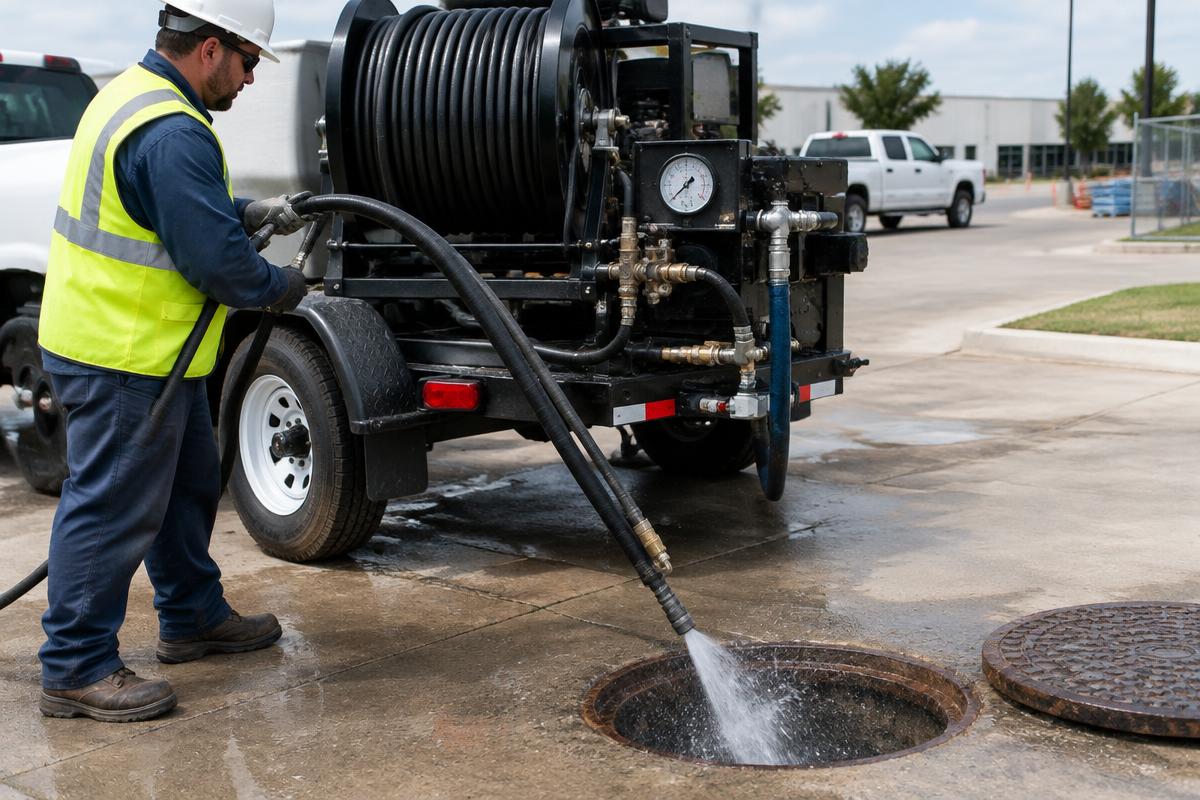
High-pressure water with the right nozzle scours the full circumference of the pipe, cuts hardened grease and flushes it downstream to be removed. The result is a line restored close to its original diameter instead of a narrow channel through the buildup.
Verify with a camera
A camera run after jetting confirms the line is clean and checks for damage, bellies or offsets that would trap grease again. That footage becomes the baseline for setting a realistic cleaning interval rather than waiting for the next backup.
- Jet the full line, not just the blocked section
- Camera to confirm and document
- Set a cleaning interval based on what the footage shows
- Coordinate with grease trap pumping so both are maintained
Grease line FAQ
- Can jetting damage older pipes?
- A trained operator inspects first when condition is unknown and adjusts pressure and nozzle choice to the pipe material.
- How often should a restaurant line be jetted?
- It varies with volume and menu. A camera baseline after cleaning is the best way to set the interval.