
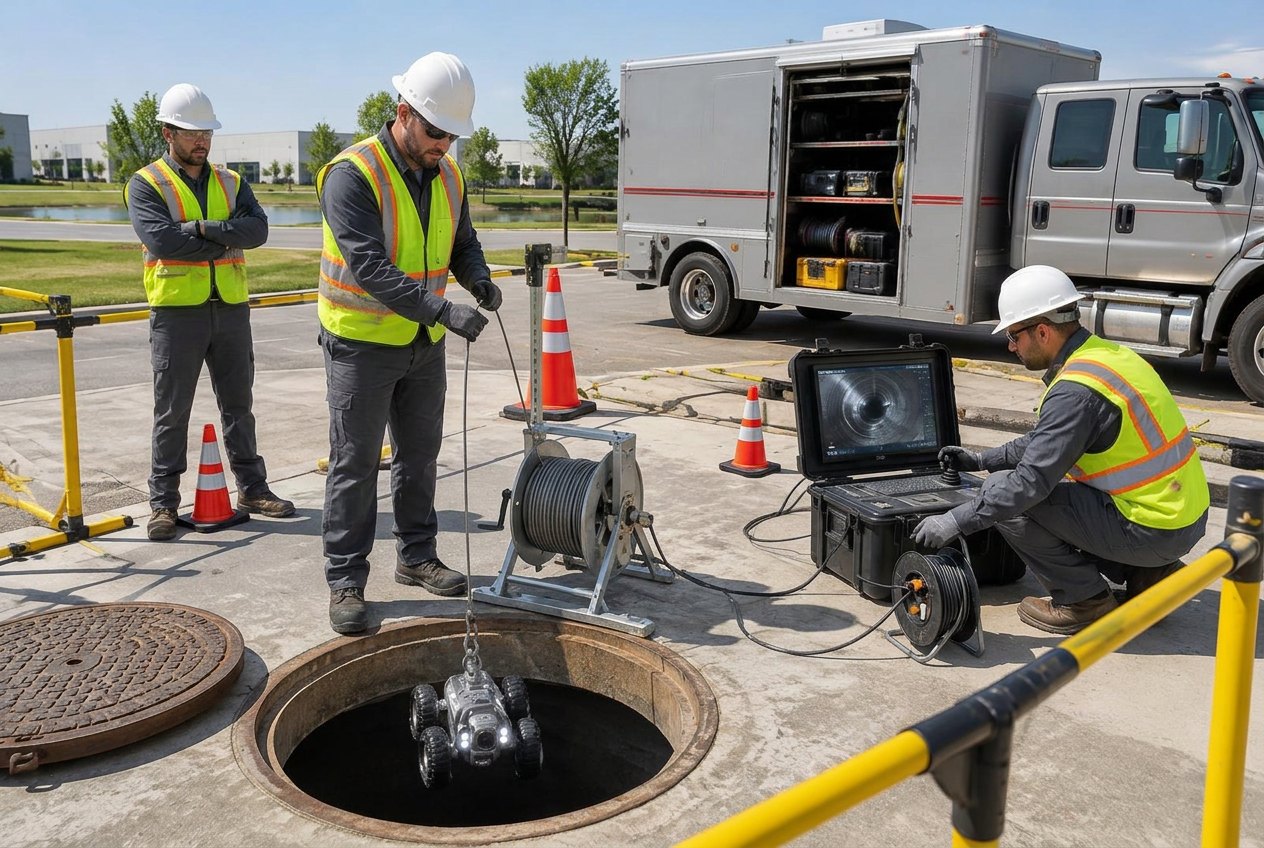
Most avoidable sewer camera delays happen before the operator arrives. Missing access, unidentified lines, active discharge and unclear report requirements can turn a straightforward Austin inspection into a partial day and an incomplete deliverable. A short pre-mobilization review keeps the camera moving and gives the project team a report it can actually use.
1. Define the decision the inspection must support
State whether the work is for construction acceptance, warranty documentation, blockage diagnosis, due diligence, rehabilitation design or a maintenance baseline. The purpose controls the level of documentation and whether the team needs PACP coding, surface locations, still images or a simple video and summary.
2. Send the available plans and line schedule
- Civil utility plans, plumbing plans or an as-built marked with the target segments
- Known pipe sizes, materials and approximate footage
- Upstream and downstream access points for each run
- The required naming convention for buildings, structures or line segments
- Owner, engineer or municipal report specifications
3. Confirm physical access before the truck arrives
Walk the access points. Confirm that cleanouts are exposed and openable, manholes are reachable, gates will be unlocked and parked vehicles or stored material will not block setup. Tell the inspection company about confined-space conditions, traffic exposure, loading docks, height restrictions and long hose or cable paths.
4. Control flow and coordinate occupants
Active discharge can obscure the lens or make upstream progress difficult. Coordinate a practical low-flow window with facility operations and affected tenants. On active construction, prevent washout water, grout, concrete slurry and loose debris from entering the line before the final camera pass.
5. Decide whether pre-cleaning belongs in the scope
New lines may contain construction debris. Existing commercial mains may contain grease, roots, scale or sediment. If the pipe wall cannot be seen, the inspection cannot establish condition. Combining cleaning and inspection under one mobilization is often more efficient when blockage history or site use makes debris likely.
6. Agree on the stopping rules
The scope should say what happens when the camera meets standing water, a heavy obstruction, an offset, a collapsed section or an inaccessible structure. Define whether the crew will attempt cleaning, switch equipment, locate the endpoint, document the obstruction and stop, or request authorization for additional work.
7. Confirm delivery and review requirements
Name the report recipient, file format and deadline. For closeout work, verify the municipality or engineer's naming and coding requirements before inspection. For diagnostic work, identify who needs a same-day call if the crew finds an urgent condition.
Pre-mobilization questions
- Does the contractor need to expose every cleanout?
- Every planned entry point should be visible and accessible before mobilization. Buried or seized access can require a scope change and may prevent completion of the intended run.
- Can inspection happen while the facility is operating?
- Often yes, but a controlled low-flow window produces clearer footage. High-use kitchens, production drains and multifamily common lines usually need coordination with operations.
- What should be sent with a quote request?
- Send the site address, plans or marked line sketch, estimated footage and diameter, access notes, target date and required report format. Photos of cleanouts and manholes are useful when plans are limited.