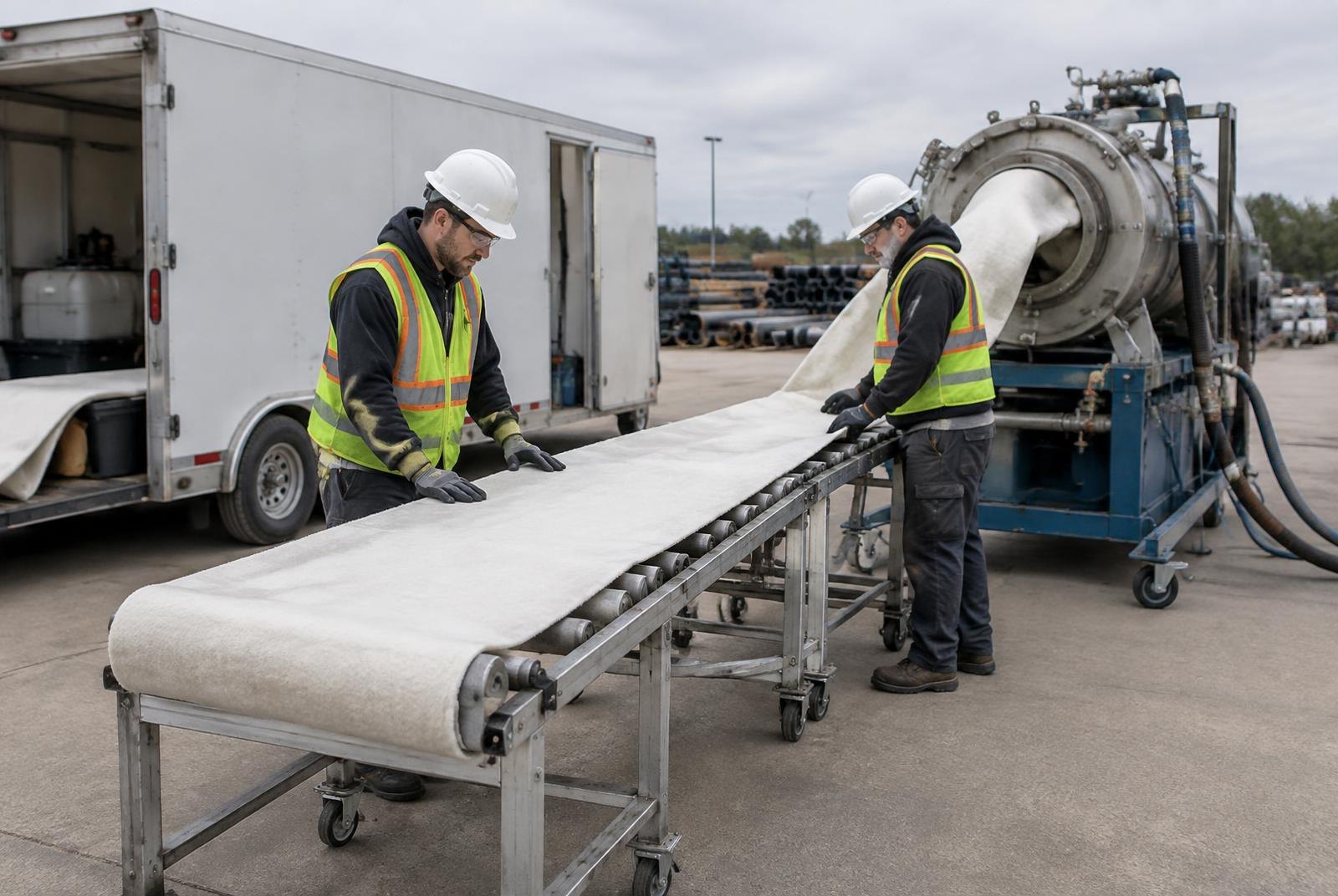
Excavating a failed sewer line under a parking lot, slab or busy drive is disruptive and expensive. Trenchless lining, most often cured-in-place pipe (CIPP), creates a new pipe inside the old one through existing access points. For the right defects it restores the line with far less disruption to tenants and operations.
Defects lining handles well
- Cracks and fractures where the pipe still holds its shape
- Root intrusion through joints
- Leaking joints and infiltration
- Corroded cast iron or deteriorated clay
When lining is not the answer
- Collapsed pipe that the liner cannot pass through
- Severe bellies, since a liner follows the existing grade
- Large offsets that block the path
- Lines needing upsizing for more capacity
Inspection comes first and last
A pre-lining CCTV inspection measures the line, identifies service connections and confirms the defects are a good fit. The line is then cleaned so the liner bonds properly. After curing, reinstated service connections are opened and a post-lining camera run documents the finished work for the owner's records.
Pipe lining FAQ
- Does lining reduce pipe diameter?
- Slightly, by the liner thickness. For most commercial gravity lines the smooth interior offsets that reduction.
- Can lining go around bends?
- Many liners handle moderate bends. The pre-lining inspection confirms whether the path is suitable.