
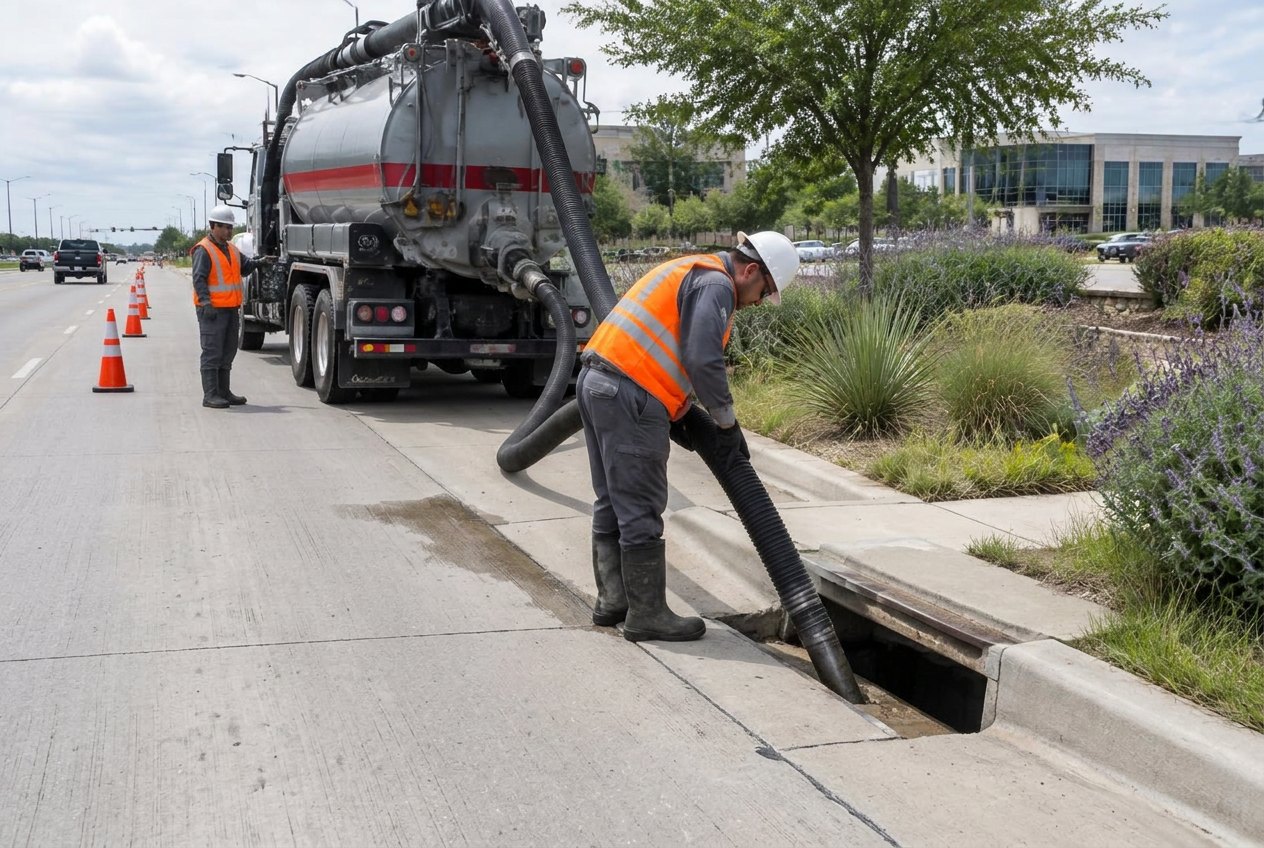
Central Texas swings between long dry spells and intense rain. During the dry months, sediment, leaves, trash and landscaping debris settle into inlets and storm lines. When a storm finally hits, that material moves at once and a partially blocked system floods parking lots, loading docks and building entrances.
Where commercial storm systems fail
- Curb and grate inlets packed with sediment and trash
- Underground storm lines with silt buildup that reduces capacity
- Culverts under drives partially filled with debris
- Detention and water quality structures that have not been cleaned
- Damaged or separated joints that let soil into the line
A practical maintenance rhythm
Most commercial sites benefit from a visual inlet check each quarter and before the spring and fall storm seasons, with vacuum cleaning of inlets and jetting of lines as needed. A CCTV inspection every few years, or after any flooding event, confirms the lines are intact and flowing at capacity.
Vacuum, jet, then verify
Effective storm cleaning is a combination: a vacuum truck removes accumulated solids from inlets and structures, a jetter clears the connecting lines, and a camera run documents the result. That documentation is useful for property managers, insurers and any permit or stormwater compliance records the site keeps.
Storm drain FAQ
- How often should commercial storm inlets be cleaned?
- It depends on site debris load. Many sites inspect quarterly and clean before the spring and fall storm seasons.
- Can you clean culverts under driveways and roads?
- Yes. Culverts are cleaned with jetting and vacuum equipment and can be inspected by camera afterward.